
Comprehensive View, Not Isolated Reports
The four types of procurement analytics (descriptive, diagnostic, predictive and prescriptive) and why most functions are strong only on the first.
By Puneesh Lamba · 8 March 2024
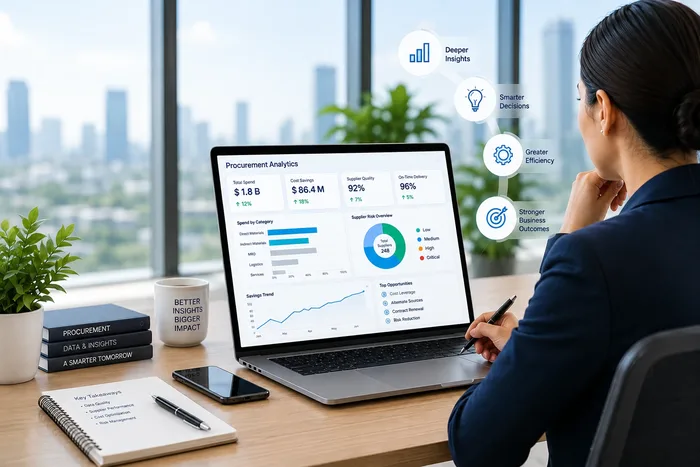
Organizations are increasingly turning to data-driven solutions to gain a competitive edge in procurement. Among the available advances, procurement analytics stands out as a tool that not only transforms traditional procurement processes but plays a central role in strategic decision-making.
Procurement analytics applies advanced data analysis across the full procurement lifecycle: supplier selection, negotiation, contract management and performance monitoring. By combining historical and real-time data, organizations make informed decisions, optimize costs and improve overall efficiency.
This whitepaper works through the key advantages of procurement analytics and where the discipline is heading next.
The four types of procurement analytics (descriptive, diagnostic, predictive and prescriptive) and why most functions are strong only on the first.
Objective delivery, quality and pricing data drives both which suppliers get chosen and continuous KPI monitoring that surfaces slipping delivery, quality drift and financial stress before a disruption hits.
Up to 20% in negotiated savings, roughly 40% faster sourcing cycles, and digitalization ROI benchmarked at 2.7x–6.6x.
Five phases from baseline through prescriptive maturity, with the descriptive foundation as the step every later stage depends on.
Procurement leaders building the business case for an analytics program, and the IT and data teams responsible for the data foundation underneath it.
The full guide includes the business benefits table in full, and a phase-by-phase implementation roadmap with typical duration and primary owners.