
Why Reverse Auctions Are Gaining Ground
How digital marketplaces reset buyer expectations, and why that shift is spilling into B2B procurement.
By Anupam Aggrwal, CEO & Co-Founder · 5 February 2022
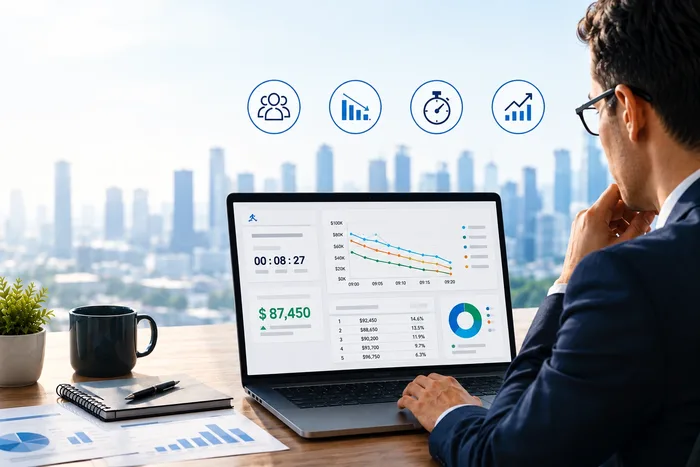
In B2B procurement, digital reverse auctions have gained substantial traction, helped by improved internet connectivity and the influence of large e-commerce platforms. They are reshaping how procurement negotiates, with clear advantages over traditional methods.
Reverse auctions facilitate real-time bidding among technically and commercially suitable vendors. The process ensures competitive pricing and eliminates unnecessary cost hidden inside traditional negotiation, cutting through layers of pricing opacity.
This guide sets out the eight benefits organizations consistently realize, from lower cost discovery through to a complete and auditable record of every negotiation - and a practical rollout path for putting the format to work.
A reverse auction flips the logic of a traditional auction. Instead of buyers bidding against each other to pay the highest price, qualified suppliers bid against each other to offer the buyer the most competitive terms for a defined scope of work.
The buyer sets the rules up front - the specification, the eligible suppliers, the auction window and, where relevant, a ceiling price - then opens the event. As suppliers submit and revise their bids within that window, each one can see where it stands relative to the field, which encourages further real competitive movement on price before the auction closes.
A traditional negotiation is sequential and largely private: the buyer speaks with one supplier at a time, and each supplier has limited visibility into how competitive its offer really is. A digital reverse auction compresses that same competitive process into a single, time-boxed, transparent event where every participant is negotiating against the same live market signal at once.
Buyers now do most of their day-to-day shopping through fast, transparent, real-time digital marketplaces. That experience has reset expectations for how competitive a purchase should feel, and it is spilling over into B2B procurement. Combined with wider internet access and more comfortable digital adoption among suppliers, the result is a much larger pool of buyers and sellers ready to negotiate online rather than over email or in person.
The shift is especially visible in fast-growing markets such as India, where rising connectivity and familiarity with online marketplaces have made digital sourcing tools a natural next step for procurement teams under pressure to move faster and show measurable savings.
Put simply: a reverse auction takes the competitive pressure that used to unfold over weeks of private negotiation and puts it in front of every qualified supplier at once.
Used on the right category, a well-run digital reverse auction delivers benefits well beyond a lower price on a single purchase order.
One caution applies to every reverse auction, and it has nothing to do with the software. The number the event produces is a negotiated saving. The number that reaches the business is a realized saving, and the two diverge more often than most procurement functions admit.
Savings leak in the gap between the close of the event and the signed contract. Quotes expire. Capacity that was available on the day gets allocated elsewhere. Market prices move. Internal approvals stall, and the supplier who won on Tuesday is asked to honour that price six weeks later. The faster the award follows the auction, the more of the negotiated number survives - which makes speed to award part of the sourcing strategy rather than an administrative afterthought.
The baseline matters just as much. A saving measured against last year's price, against the highest bid received, or against an internal budget estimate will produce three very different numbers from the same event. Agreeing the baseline with finance before the auction runs is what keeps the reported figure credible when it is questioned later - and it usually will be.
None of this argues against the format. It argues for treating the auction as one step in a sourcing cycle rather than the whole of it. The competitive tension the event creates is real; whether it converts into money depends on what happens in the days either side of it.
Reverse auctions work best where price is a meaningful part of the decision and suppliers can compete on a like-for-like basis. Good candidates typically share a few traits:
Read against the Kraljic Matrix, that description maps closely onto leverage categories: high value, low supply risk, multiple capable suppliers, standard specifications.
The format is a weaker fit for highly bespoke, innovation-led categories where the value depends on deep collaboration, or for relationships where long-term partnership and joint development matter more than the lowest price on a single transaction. In those cases a structured negotiation or strategic sourcing process will usually serve the category better - which is the argument set out in our guide to negotiating with strategic suppliers.
It is worth being direct about this, because the most common failure with reverse auctions is not a badly run event. It is a well-run event on the wrong category. Applying open price competition to a supplier you depend on, cannot replace, and need goodwill from will damage the relationship without producing the savings, because the competitive tension the format relies on is not actually there.
The prerequisite is also easy to underestimate: bids are only comparable if the scope is genuinely identical. If three suppliers are quoting against three slightly different interpretations of the specification, the auction produces a fast, transparent, well-documented ranking of numbers that are not measuring the same thing.
The full whitepaper adds the operational detail: how to structure and run an event end to end - specification preparation, supplier pre-qualification, choosing the auction format and window, setting a ceiling price, and managing bid rules and extensions - so the benefits above survive contact with a live event.
How digital marketplaces reset buyer expectations, and why that shift is spilling into B2B procurement.
From lower cost discovery and fair, transparent bidding through to a complete auditable record.
The category traits that make a reverse auction the right tool - and where it is a weaker fit.
Five steps from picking a pilot category through to reviewing results and scaling the format.
Procurement leaders and category managers evaluating digital reverse auctions as a way to drive better prices, faster sourcing cycles and stronger supplier competition.
The full guide includes the complete eight-benefit breakdown, guidance on where the format fits best, and a five-step rollout path for running your first digital reverse auction.