
How eAuctions Can Drive Measurable Cost Savings for Your Business?
By Anupam Aggrwal · 18 April 2022
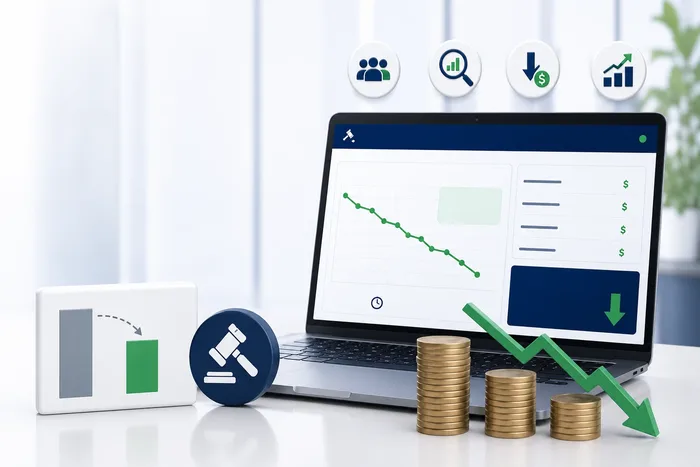
Most procurement teams think of eAuctions as a tool to get better prices. That is true. But it is only a small part of the story. In reality, eAuctions can directly improve profitability, reduce supply risk, and strengthen supplier relationships when used correctly.
I have seen organizations unlock significant value not just from price reductions, but from better competition, smarter sourcing decisions, and faster execution. The difference lies in how you design and use eAuctions.
8 Steps to Maximize eAuction Value
Here is a simple, practical way to understand how eAuctions can actually make money for your business.
Step 1: Use Competition to Discover the Right Price
In traditional negotiations, suppliers rarely reveal their best price upfront. eAuctions change this dynamic. When multiple suppliers compete in real time, they adjust their bids based on market pressure. This leads to true price discovery. You are not just negotiating. You are letting the market define the price.
This often results in better outcomes than one to one discussions.
Step 2: Choose the Right eAuction Type for the Category
Not all eAuctions work the same way. The format you choose has a big impact on results.
English eAuctions are the most common. Suppliers keep lowering prices in an open competitive format. This works well when specifications are clear and multiple suppliers are available.
Dutch eAuctions work differently. The price moves in one direction and suppliers respond quickly when they are ready to accept. This is useful when speed is important.
Japanese eAuctions are structured and disciplined. Suppliers must accept each price drop step by step to stay in the eAuction. This creates strong price pressure and works well in competitive markets.
French eAuctions allow suppliers to see their ranking but not always the exact price gap. This maintains competition while avoiding extreme price drops.
The key is simple. Match the eAuction format to the category and market conditions.
Step 3: Expand Supplier Participation
More competition usually leads to better outcomes. eAuctions make it easier to onboard and include more suppliers in the process.
- Invite both existing and new suppliers, but do supplier qualification thoroughly.
- Use λ-Factor (Lambda or Loading) or define quantity allocation to new suppliers.
- Encourage participation by making the process simple and transparent.
- Avoid limiting eAuctions to a small group.
Even adding one or two serious suppliers can change the final result.
This not only improves pricing but also reduces dependency on a few suppliers.
Step 4: Reduce Negotiation Time and Cost
Traditional negotiations take time. Multiple rounds of discussions, emails, and revisions slow down the process. eAuctions compress this into a structured, time bound event. You can complete negotiations in hours instead of weeks.
This reduces internal effort and speeds up decision making. Faster cycles mean faster savings realization.
Step 5: Improve Transparency and Control
One of the biggest advantages of eAuctions is visibility. Every bid, every movement, and every decision is recorded.
This helps in multiple ways.
- It builds trust with finance and leadership.
- It simplifies audits and reviews.
- It ensures fairness in supplier selection.
Transparency also improves supplier confidence in the process.
Step 6: Drive Better Supplier Behavior
Suppliers behave differently in a competitive and transparent environment.
- They come better prepared.
- They price more realistically.
- They respond faster.
Over time, this improves the overall quality of your supplier base. It also sets a clear expectation that procurement decisions are structured and performance driven.
Step 7: Link Outcomes to Business Impact
Savings alone do not tell the full story. Track how eAuctions contribute to overall business outcomes.
- Lower input costs improve margins.
- Better supplier coverage reduces risk.
- Faster negotiations improve project timelines.
When you connect eAuction results to business impact, it becomes easier to get leadership support and scale the approach.
Step 8: Build a Repeatable Process
Running one successful eAuction is good. Building a repeatable process is where the real value lies.
- Standardize how you select categories (Ref: How to Transform Your Supplier Negotiation Strategy Using the Kraljic Matrix).
- Create templates for different eAuction types.
- Train your team to design and manage events.
Consistency leads to predictable outcomes.
A Practical Way to Make This Work
Most teams understand the benefits of eAuctions but struggle to scale them. The challenge is not the concept. It is execution.
At procurEngine, we have seen procurement teams use simple digital workflows to run structured eAuctions, onboard suppliers, and track outcomes without complexity. It helps teams move from occasional use to a consistent negotiation approach that drives real business value.
If you are looking to make eAuctions a core part of your procurement strategy, this is worth exploring.
Learn more at procurengine.ai.
People Also Ask
How do eAuctions improve supplier negotiation?
They create real time competition, leading to better pricing and faster decisions.
What are the benefits of eSourcing tools?
They improve transparency, efficiency, and consistency in procurement.
Can eAuctions reduce procurement risk?
Yes. They increase supplier participation and reduce dependency on a few vendors.
How do you choose the right eAuction format?
It depends on the category complexity, supplier market, and business objective.
Do eAuctions work for services procurement?
Yes, if the scope is clearly defined and suppliers are comparable.
Questions about this article.
What are eAuctions in procurement?
How do eAuctions help businesses make money?
What is an English eAuction?
What is a Dutch eAuction?
What is a Japanese eAuction?
What is a French eAuction?
Are eAuctions suitable for all categories?
About the Author
Anupam Aggrwal has spent more than 25 years handling negotiations and helping organizations improve procurement performance through process transformation, digitalization, and strategic sourcing. He also gives guest lectures to supply chain students at Mays Business School at Texas A&M University and the Eli Broad Graduate School of Management at Michigan State University.